
Materials
What we use for our services
- Fiberglass
- Cellulose Insulation
- Spray Foam Insulation (Open & Closed Cell)
- Rigid Foam Board insulation
- Mineral Wool
- Cotton (Denim) Insulation
- Sheep's Wool Insulation (Special Order)
- Reflective or Radiant Barrier Insulation
- Fiberglass Insulation
Types: Batt, roll, and loose-fill/blown-in
Benefits:
One of the most cost-effective insulation materials on the market
Readily available and trusted by contractors for decades
Non-combustible — adds a layer of fire protection to walls and ceilings
Helps reduce heating and cooling costs year-round
Doesn’t attract pests or insects
Resistant to moisture absorption in standard applications
Available in a wide range of R-values for attics, walls, floors, and basements
Made from recycled glass, making it partially eco-friendly
- Cellulose Insulation
Type: Loose-fill/blown-in
Benefits:
Made primarily from recycled newspaper — very environmentally responsible
Fills every nook and cranny, making it ideal for older homes or irregular cavities
Helps seal small gaps and cracks that other insulation types miss
Treated to resist mold, fire, and pests — adds multiple layers of protection
Excellent acoustic barrier — reduces noise from outside or between rooms
Often qualifies for green building or energy efficiency rebates
Has a low carbon footprint in production and installation
- Spray Foam Insulation
Types: Open-cell and closed-cell
Benefits:
Provides the highest R-value per inch, which means better performance in tighter spaces
Expands to seal out air, moisture, allergens, and even insects
Closed-cell version adds strength to walls, roofs, and framing structures
Greatly reduces energy loss, improving HVAC system efficiency
Minimizes condensation issues in humid environments
Lowers sound transfer — especially open-cell foam in interior walls
A smart investment with long-term energy savings and increased property value
- Rigid Foam Board Insulation
Types: XPS (extruded), EPS (expanded), Polyiso
Benefits:
Doesn’t degrade or compress over time — reliable for decades
Ideal for use under siding, roofing, or foundation slabs
Helps meet strict energy codes with minimal wall thickness
Effective vapor barrier when taped and sealed properly
Enhances thermal performance in extreme hot or cold climates
Can be layered to reach desired R-values without bulky materials
Great choice for commercial, residential, and retrofit applications
- Mineral Wool (Rock Wool or Slag Wool)
Types: Batt or loose-fill
Benefits:
Fire resistance makes it ideal for garage walls, furnace rooms, and high-risk areas
Water-resistant and drains moisture rather than holding it — reducing mold risk
Offers one of the best soundproofing materials due to its density
Won’t sag or settle over time — keeps consistent R-value
Easy to cut and fit snugly around outlets, pipes, or irregular cavities
Made from volcanic rock or recycled slag, supporting eco-conscious builds
Excellent choice for sound studios, offices, multi-family homes, and more
- Cotton (Denim) Insulation
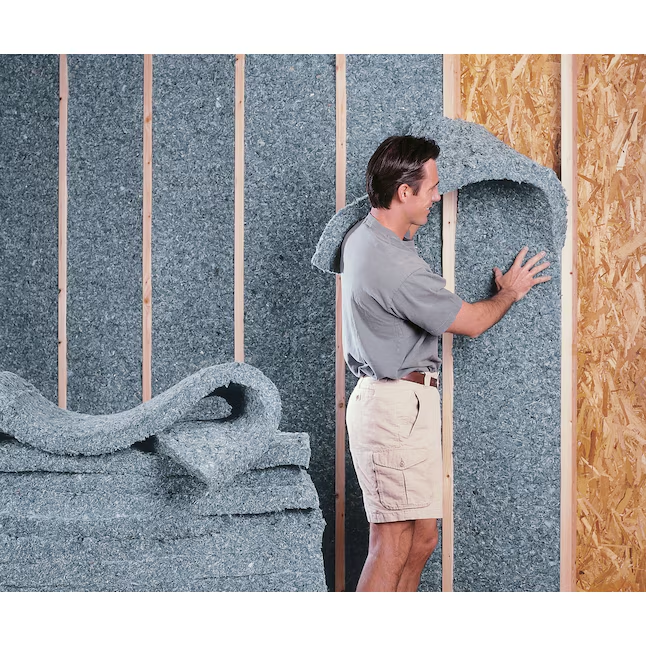
Type: Batt
Benefits:
Perfect for health-conscious homeowners — no VOCs or itchy particles
Natural sound absorber — excellent for quiet zones like bedrooms or offices
Supports circular economy by reusing denim and textile waste
Energy-efficient with great thermal resistance
Maintains performance over time without sagging or compressing
A great “green” alternative with comparable thermal values to fiberglass
No off-gassing or harmful chemicals — ideal for people with allergies or sensitivities
- Sheep’s Wool Insulation (Special Order)

Type: Batt or loose-fill
Benefits:
Naturally adapts to temperature and humidity changes — adds comfort year-round
Helps purify air by absorbing indoor pollutants like formaldehyde
Self-extinguishing when exposed to flame — very safe
100% sustainable and biodegradable — no synthetic binders or treatments needed
Doesn’t irritate the skin or lungs — installer and occupant friendly
Absorbs sound and vibration — great for peace and quiet
A premium insulation choice for eco-conscious or high-performance homes
- Reflective or Radiant Barrier Insulation
Type: Foil-based sheeting (often installed in attics)
Benefits:
Reflects up to 97% of radiant heat — crucial for attics in hot climates
Can reduce attic temps by 30°F or more, improving comfort and efficiency
Lightweight and easy to install over existing insulation
Helps prolong HVAC system life by reducing workload
Not affected by moisture, mold, or pests
Great in garages, workshops, and metal buildings as well
Works well when paired with fiberglass or foam for hybrid systems
Is your house hot in the summer and cold in the winter?
Gennerally speaking older and existing homes are generally less energy efficient compared to new construction projects due to the lack of insulation which maintains adequate year round temperatures. New construction projects are required to meet these standards when it comes to insulation. Insulation helps keep energy bills low! contact us today to see how we can help you accomplish that!
The Benefits of Insulation
An under-insulated home will experience substantial heat loss and gain throughout the year–and there are literally millions of older homes that lack sufficient insulation. Sealing leaks and installing high-quality Certain Teed insulation benefits, homeowners, in several ways
- Improves comfort, with fewer drafts and hot and cold spots
Lowers energy bills year-round for the life of the home - Helps ensure performance of HVAC systems
- Provides potentially higher resale value
- Protects roofs against winter ice dams
The Benefits of Insulation


